ph365 Probability in Casino Games
ph365 Probability in Casino Games: Mastering Your Odds for Online Betting Success
Welcome to the exciting world of online betting, where understanding the odds can significantly enhance your gaming experience and potential winnings. At ph365, we believe that informed players are successful players. This comprehensive guide will delve into the fascinating realm of probability as it applies to casino games, helping you to make smarter decisions whether you're spinning slots, hitting blackjack, or rolling the dice. For players in the Philippines market, grasping these core concepts is not just about luck; it's about strategy, knowledge, and maximizing your enjoyment on our mobile-first platform. From the simplest coin flip to the complex algorithms behind modern video slots, probability is the invisible hand guiding every outcome. Join us as we demystify the numbers and empower you with the insights needed to navigate the vibrant landscape of online casino games, available right at your fingertips.
Understanding probability is crucial for anyone engaging in online betting. It's the mathematical backbone of every casino game, dictating the likelihood of certain outcomes. While luck plays a role, a solid grasp of probability allows you to approach games with a strategic mindset, manage your bankroll more effectively, and ultimately, make more informed choices. This article is designed to equip you with the fundamental principles of probability, showcasing how they apply to popular casino games available on ph365, your premier online betting destination in the Philippines. Let's explore how you can leverage these insights to elevate your gaming.
Table of Contents
- Understanding Basic Probability in Casino Games
- House Edge and Return to Player (RTP): What They Mean for You
- Probability in Popular Casino Games
- Strategies to Leverage Probability for Better Outcomes
- Common Misconceptions and Pitfalls in Probability
- Maximizing Your ph365 Experience with Probability Insights
Understanding Basic Probability in Casino Games
At its core, probability is a measure of the likelihood of an event occurring. It's expressed as a number between 0 and 1, where 0 means the event is impossible and 1 means it's certain. In casino games, this translates to the chances of hitting a specific number on a roulette wheel, drawing a certain card in blackjack, or landing a winning combination on a slot machine. For instance, if you roll a fair six-sided die, the probability of rolling any specific number (e.g., a 3) is 1/6, or approximately 16.67%. This simple principle underpins all more complex probability calculations in gaming.
When you play on ph365, every game, from slots to live casino offerings, operates on these probabilistic foundations. Understanding how these odds are calculated can demystify the game and help you make more informed betting decisions. For example, knowing the probability of getting a blackjack allows you to decide whether to hit or stand. Similarly, recognizing the odds of a certain symbol combination appearing on a slot machine, even if not explicitly stated, helps in understanding the game's volatility. It's not about predicting the future, but about understanding the mathematical framework that governs the game.
House Edge and Return to Player (RTP): What They Mean for You
Two critical concepts in casino probability are the House Edge and Return to Player (RTP). The House Edge is the casino's built-in advantage, expressed as a percentage of your initial bet. It represents the average gross profit the casino expects to make from each bet over the long run. For example, if a game has a 2% house edge, the casino expects to keep 2 cents for every dollar wagered over an extended period. This doesn't mean you'll lose 2% of every bet, but rather that the casino has a statistical advantage that ensures profitability over millions of plays.
Conversely, Return to Player (RTP) is the percentage of all wagered money that a slot machine or casino game will pay back to players over time. It's essentially the inverse of the house edge. If a slot game has an RTP of 96%, it means that, on average, for every ₱100 wagered, the game will return ₱96 to players over its lifetime. The remaining ₱4 is the house edge. When choosing games on ph365, always look for games with higher RTPs, as these offer better long-term value. While RTP doesn't guarantee a win on any single session, it's a crucial indicator of a game's fairness and potential payouts over extended play.
Probability in Popular Casino Games
Slots
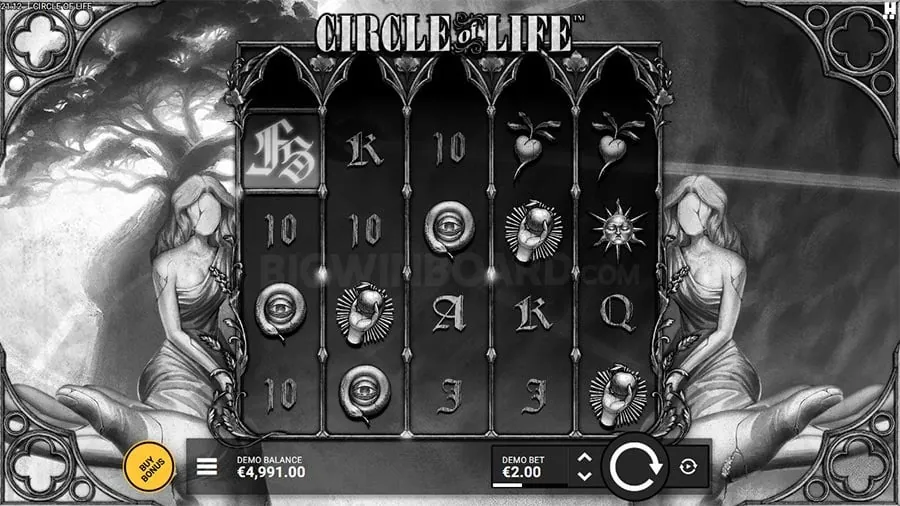
Slot machines are perhaps the most popular casino games, and their outcomes are determined by a Random Number Generator (RNG). While each spin is independent, the game's probability is programmed into its RTP. High RTP slots (96% or more) statistically offer better returns. For example, a slot with 5 reels and 20 symbols per reel has billions of possible combinations, but the RNG ensures that winning combinations occur at a predetermined frequency based on the game's RTP. Understanding this helps manage expectations; slots are games of chance, but their long-term payout is fixed by their design. Explore the vast selection of slots on ph365 with varying RTPs.
Blackjack
Blackjack is unique because player decisions directly influence the probability of winning. Basic strategy in blackjack is derived from calculating the probabilities of various outcomes based on your hand and the dealer's up-card. For instance, knowing the probability of busting if you hit on a hard 16 against a dealer's 10 can guide your decision to stand. By consistently following basic strategy, players can reduce the house edge to less than 0.5%, making it one of the most favorable casino games. ph365 offers various blackjack tables where you can apply these strategies.
Roulette
Roulette is a classic game of pure chance, but probabilities are straightforward. In European roulette, with 37 pockets (1-36 and a single 0), the probability of hitting any single number is 1/37 (approximately 2.7%). Betting on red/black has a probability of 18/37 (approximately 48.6%), as there are 18 red and 18 black numbers. The house edge comes from the single zero. American roulette, with an additional double zero, has a higher house edge due to 38 pockets. Understanding these odds helps you choose bets with better probabilities, even if the payouts differ.
Strategies to Leverage Probability for Better Outcomes
While you can't change the inherent probabilities of casino games, you can adopt strategies that leverage them to your advantage:
- Choose Games with High RTP/Low House Edge: As discussed, games like blackjack (with basic strategy) and certain video poker variants offer better long-term prospects than games with higher house edges. Always check the RTP information on ph365 when available.
- Employ Basic Strategy in Skill Games: For games like blackjack and video poker, memorizing and applying basic strategy significantly reduces the house edge. These strategies are mathematically proven to offer the best possible play given the probabilities.
- Bankroll Management: Understanding that probability plays out over the long term means you need a robust bankroll management strategy. Don't chase losses, and set limits for both wins and losses. This ensures you can ride out statistical variance and enjoy your gaming experience responsibly on ph365.
- Understand Volatility in Slots: Slots have different volatilities (or variance). Low volatility slots offer more frequent but smaller wins, while high volatility slots offer less frequent but larger wins. Choose based on your risk tolerance and bankroll.
Common Misconceptions and Pitfalls in Probability
Many players fall prey to common misconceptions about probability:
- The Gambler's Fallacy: This is the mistaken belief that if an event has occurred more frequently than normal in the past, it is less likely to happen in the future (or vice versa). For example, if a roulette wheel lands on red five times in a row, the probability of it landing on black next is still approximately 48.6%, not higher because black is